Cognac winemaking: our 2026 fermentations in the cellar
The presses have fallen silent, but the winery never sleeps: since the end of the 2026 harvest, our vats have been fermenting. Native yeasts, no added sulphites, no oenological additives, and daily monitoring of density and temperature: this is how, at Genté, the wine that will become cognac is born — whilst our ‘HoméoJuices’ juices, meanwhile, do not ferment. A new instalment of the Vineyard Diary, from the cellar.
The presses have fallen silent, but the cellar doors remain open. Since the end of our 2026 harvest – modest in volume but exceptional in quality – another season has begun at Genté: the season of the vats. Winemaking is underway, and here at our estate it’s done just like everything else — without adding anything. A new instalment of our Vineyard Diary, this time focusing on the cellar.
The essentials
- After the harvest, the grapes take two distinct paths: the juices destined for the ‘HoméoJuices’, which do not ferment, and the musts destined for cognac, which become wine through alcoholic fermentation.
- Cognac vinification is carried out without added sulphites or chaptalisation: this is stipulated by the appellation’s specifications — and for us, a matter of course that goes even further, to the point of using zero oenological additives.
- Our fermentations are spontaneous: it is the indigenous yeasts – those from the grapes and the cellar – that do the work. No commercial yeast is used here.
- Each vat is monitored day by day: the falling specific gravity indicates that sugar is being converted into alcohol, whilst the temperature tells us whether the must is fermenting smoothly.
In the cellar, the harvest continues
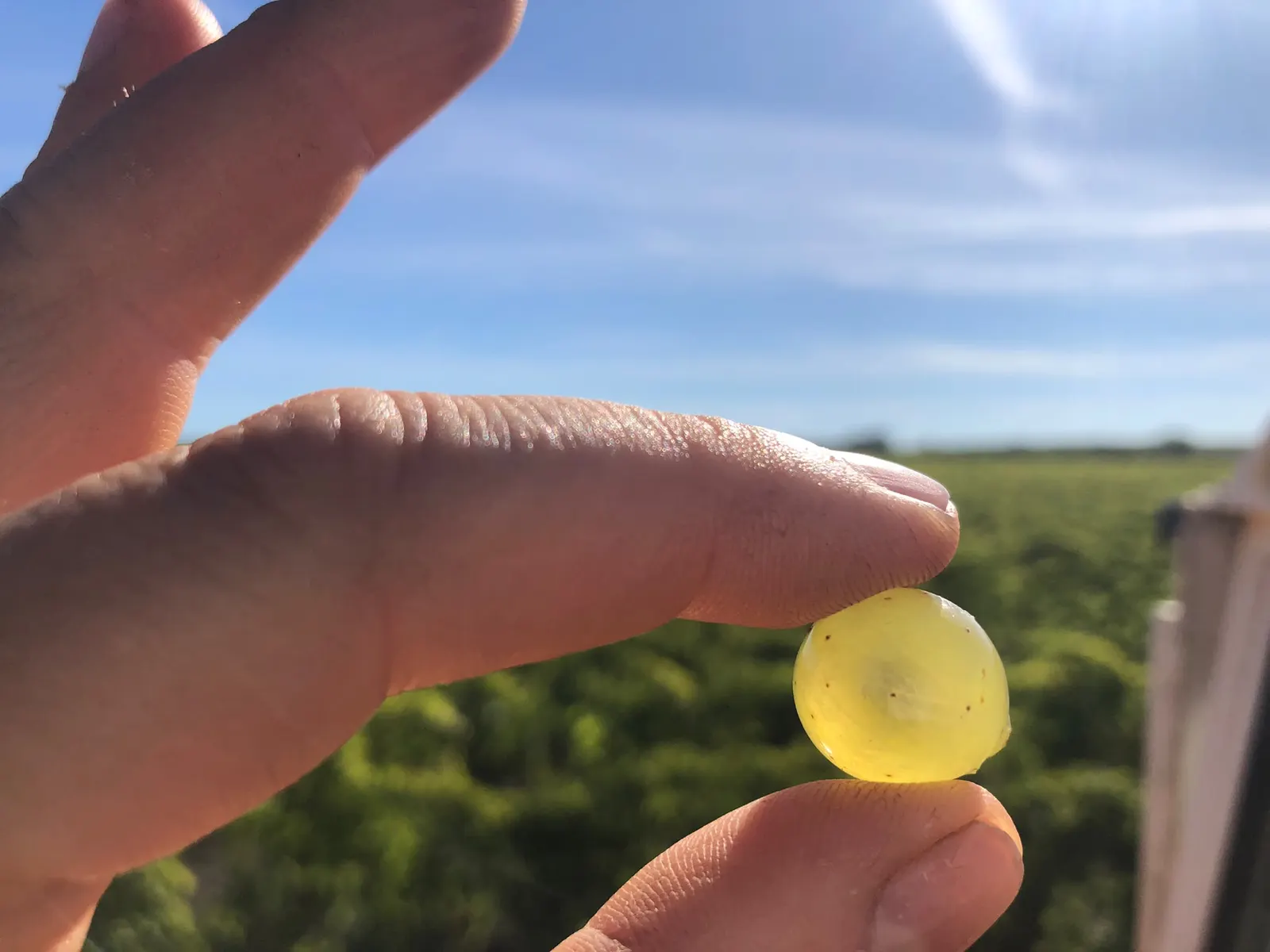
It is often thought that the harvest ends when the last bucket is emptied. In reality, it simply moves to a different location. Once the bunches have been pressed, the must remains: a cloudy, sweet, living juice that waits for no one. This year, there is less than usual – the drought has taken its toll – but what the press has yielded is dense, golden and concentrated. When the vine bears fewer grapes, it nurtures those that remain; this is also evident in the glass of must.
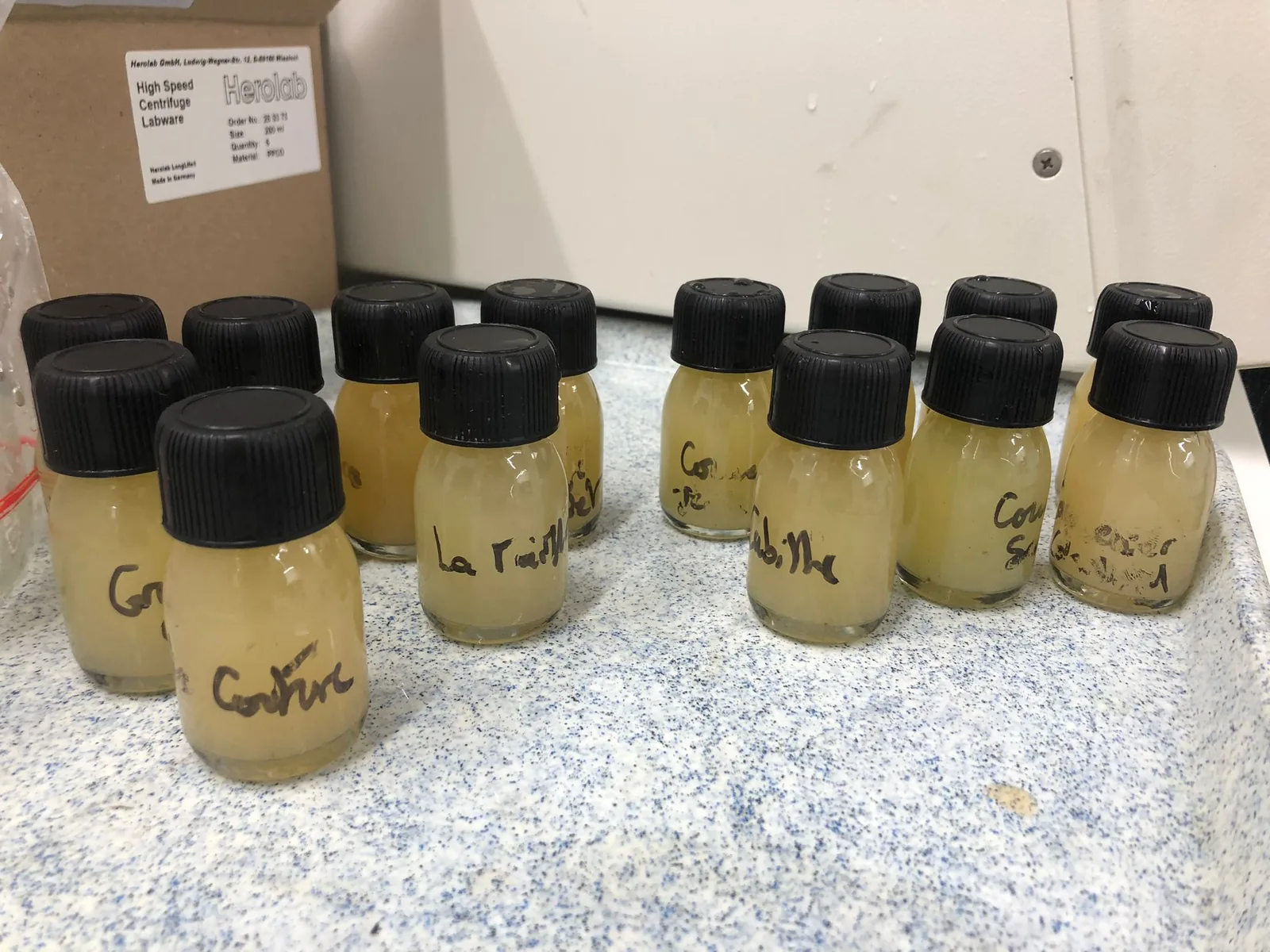
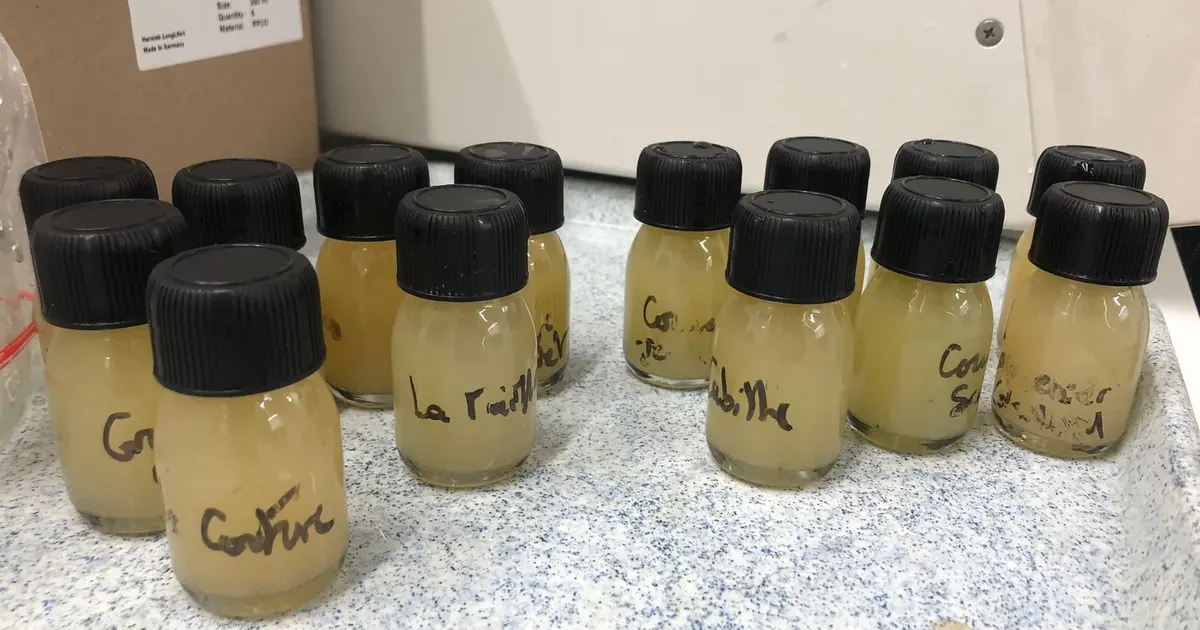
Each plot is vinified separately. What our ripeness checks measured at the end of August — sugars, acidity, assimilable nitrogen — is now being verified in the vats. And that is where the winemaking really begins.
Two destinies for the same grape
Before we talk about fermentation, an important distinction — because it answers a question we’re often asked.
Part of our harvest becomes our sparkling grape juicesHoméoJuices These juices do not ferment: they are pressed, left as they are, and their bubbles come from carbonation, just like sparkling water. No fermentation, so no alcohol — the ‘0%’ on the label isn’t a sleight of hand; it’s simply the absence of any transformation whatsoever.
The other part takes the opposite route: that of cognac. To be distilled one day, a must must first become wine. It is this fermentation that is currently taking place in our vats — and it is this that the rest of this article discusses.
A wine with no added sulphites: the cognac rule
Here’s something few people know, even amongst wine enthusiasts: wine intended for cognac distillation is, by law, one of the most natural wines there is. The appellation’s specifications prohibit the addition of sulphites and forbid chaptalisation — no sulphur, no sugar. The must enters the vat exactly as it comes from the press.
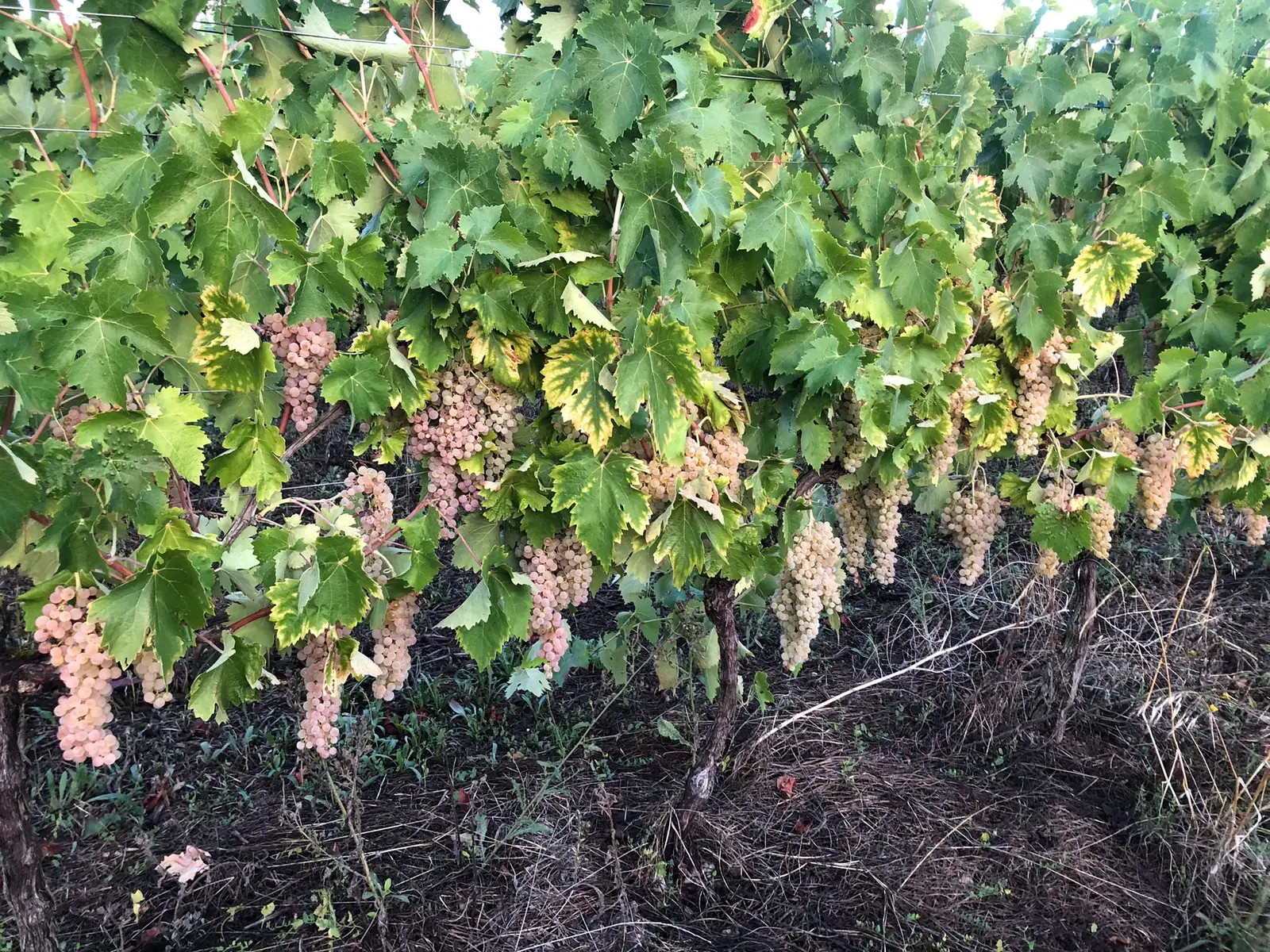
How does a wine without any added protection hold up? Through its own composition. A wine intended for distillation is deliberately low in alcohol and distinctly acidic — and it is this natural acidity that keeps it sound during the weeks between fermentation and distillation. Grapes harvested at the point of balance carry their own preservation within them. This is precisely why we harvest at the optimum rather than on a set date, even if it means picking in the cool of the day when the summer heat is at its peak: a fresh, balanced grape arrives at the winery with everything it needs to defend itself.
Many wineries stop at this basic requirement. We go further: in our winery, the vats receive no oenological additives of any kind. No enzymes, no synthetic nutrients, no commercial yeasts. The vines are nurtured throughout the year using our holohomeopathic method, from the vine to the winery — it would be strange to care for living organisms for twelve months only to bypass them at the very moment when they have the most to say.
Indigenous yeasts: the grapes ferment on their own
What turns sugar into alcohol? Yeasts — microscopic fungi naturally present on the skin of the grapes, in the air of the cellar, on the wood and on the walls. These are known as indigenous yeasts, as opposed to the commercially selected yeasts that much of the wine industry adds to its vats to standardise fermentation.
We do not add yeast. Our fermentations are spontaneous: the must begins to ferment when its yeast population is ready, usually after a few days. This approach requires two conditions, and these are prepared well before the grapes even reach the cellar. Firstly, a healthy harvest — intact berries, free from rot, picked at just the right time. Secondly, a must that provides sufficient nourishment for its yeasts: this is the crux of the matter regarding assimilable nitrogen, which we measured during the final ripeness check. Despite the drought, our 2026 musts show adequate levels of this — enough to allow for complete, spontaneous fermentations, running smoothly and without the need for additional support.
In return, the indigenous yeasts deliver a fermentation that captures the essence of the place. A selected yeast strain does the same job inGenté as it does in Australia. Ours live only here — they are as much a part of the terroir as the limestone beneath our vines.
Density, temperature: the fermentation log
Spontaneous fermentation does not mean neglected fermentation. Quite the opposite, in fact: when we add nothing, we observe everything. Every day, vat by vat, two measurements form our logbook.
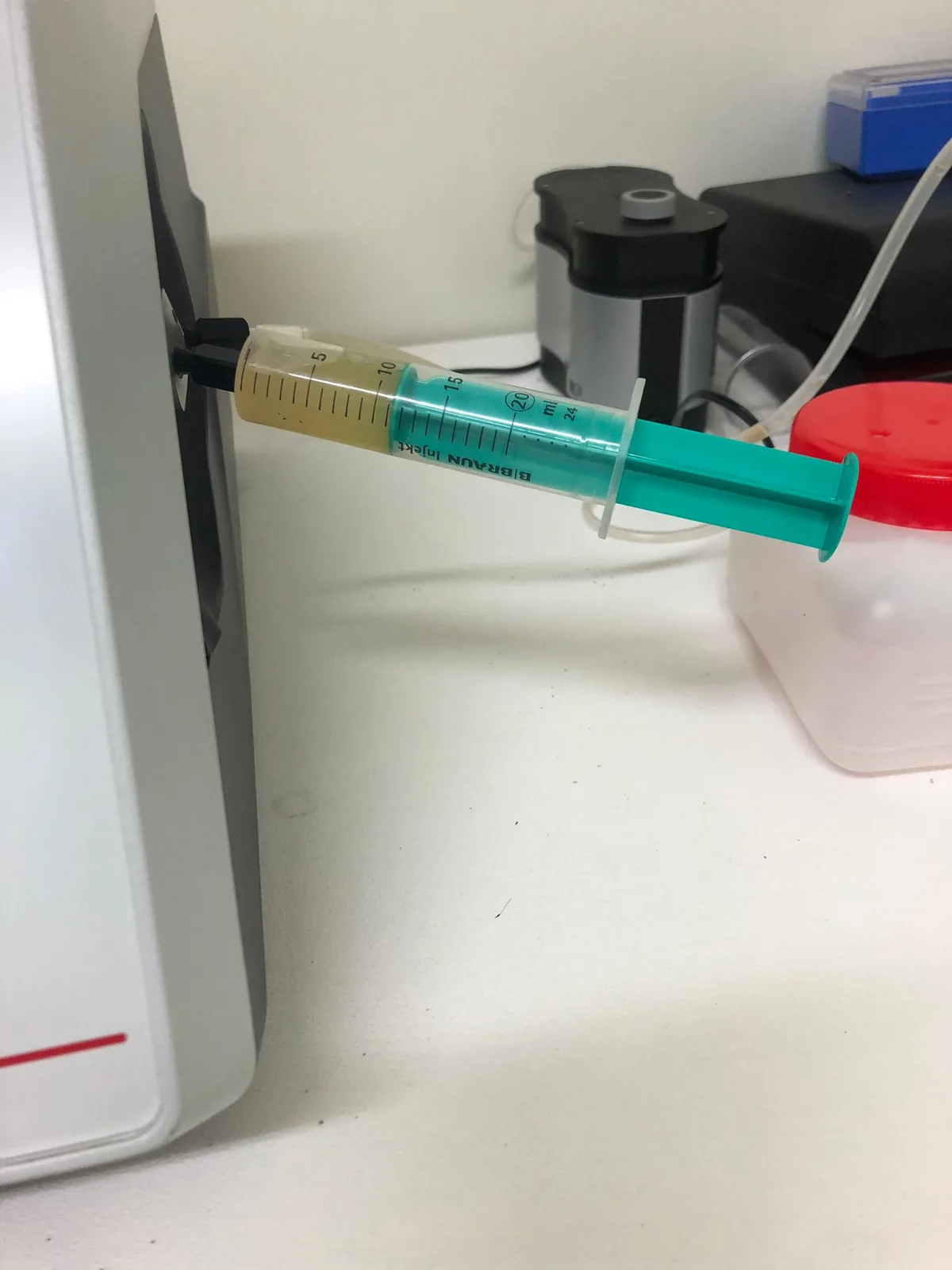
Density, first of all. A must rich in sugar is denser than water; as the yeasts convert this sugar into alcohol, the density drops. The hydrometer immersed in the test tube thus tracks, figure by figure, the progress of the process: a must starts at around 1080 to 1090, and the wine is ‘dry’ — all the sugar consumed — when the curve drops below 995. A curve that falls steadily is a happy vat. If the curve levels off for too long, we redouble our attention.
Then there’s the temperature. Fermentation generates heat, and yeasts that get too hot go into overdrive and then burn out — and in the process, the aromas evaporate. If it’s too cold, they go dormant. We therefore take care to keep the vats within a moderate temperature range, where the transformation takes place gently, over one to three weeks depending on the vats and the vintage.
It’s a task involving few actions but a great deal of presence: tasting, smelling, listening to the hiss of escaping carbon dioxide. Flavie and Virgile take turns – in October, the cellar is a living space.
And afterwards? A wine made for the still
Once fermentation is complete, we do not end up with a table wine – nor is that the aim. Low in alcohol, lively and cloudy with its fine lees, this is a wine made to be transformed: it awaits the still. In a few weeks’ time, the distillation season will begin, and this wine will pass through the copper still twice, following the Charente double-heating method we told you about last winter.
Until then, each vat is finishing its work at its own pace. The 2026 vintage has yielded little, but what it has yielded is fermenting well — and what ferments well distils well.
Frequently Asked Questions
What additives are permitted in the production of cognac?
The appellation’s specifications prohibit the addition of sulphites and chaptalisation (the addition of sugar). Other oenological practices remain legally permissible — the addition of yeast, enzymes and nutrients. Here, the answer is simpler: none. The must ferments on its own, using its own yeasts and natural nitrogen.
Why are sulphites not added to wine intended for cognac?
Because the sulphur would carry over into the distillation process and impart off-flavours to the eau-de-vie. Instead, the wine is protected by its high natural acidity and low alcohol content — and by distillation taking place within months of fermentation.
What is indigenous yeast?
A yeast naturally present on the grapes or in the cellar, as opposed to selected yeasts produced industrially and added to the vat. Working with indigenous yeasts means allowing fermentation to begin naturally, using the local microflora — provided the grapes are healthy and the must is well-balanced.
How long does the fermentation of a distillation wine take?
Approximately one to three weeks, depending on the richness of the must, the temperature in the cellar and the vintage. It is considered complete when the density stabilises below the threshold for dry wine: all the sugar has been converted.
A wine cellar is never as well described as it is experienced: if you’re passing through the ‘Grande Champagne’ this autumn, do come and visit the cellar at Genté to see the vats — and, whilst you’re there, taste both the unfermented must and the promise of the wine as it ferments.
 Flavie & Virgile · Domaine de Genté