Final ripeness check ahead of the 2026 harvest: sugar levels, acidity and nitrogen
Sampling bags, must vials, analyser: our final summer ripeness check determines the harvest date, plot by plot. Total acidity, pH, potential alcohol content, assimilable nitrogen: what these figures reveal about our grapes following the drought of 2026, and why our Ugni Blanc berries are pink.
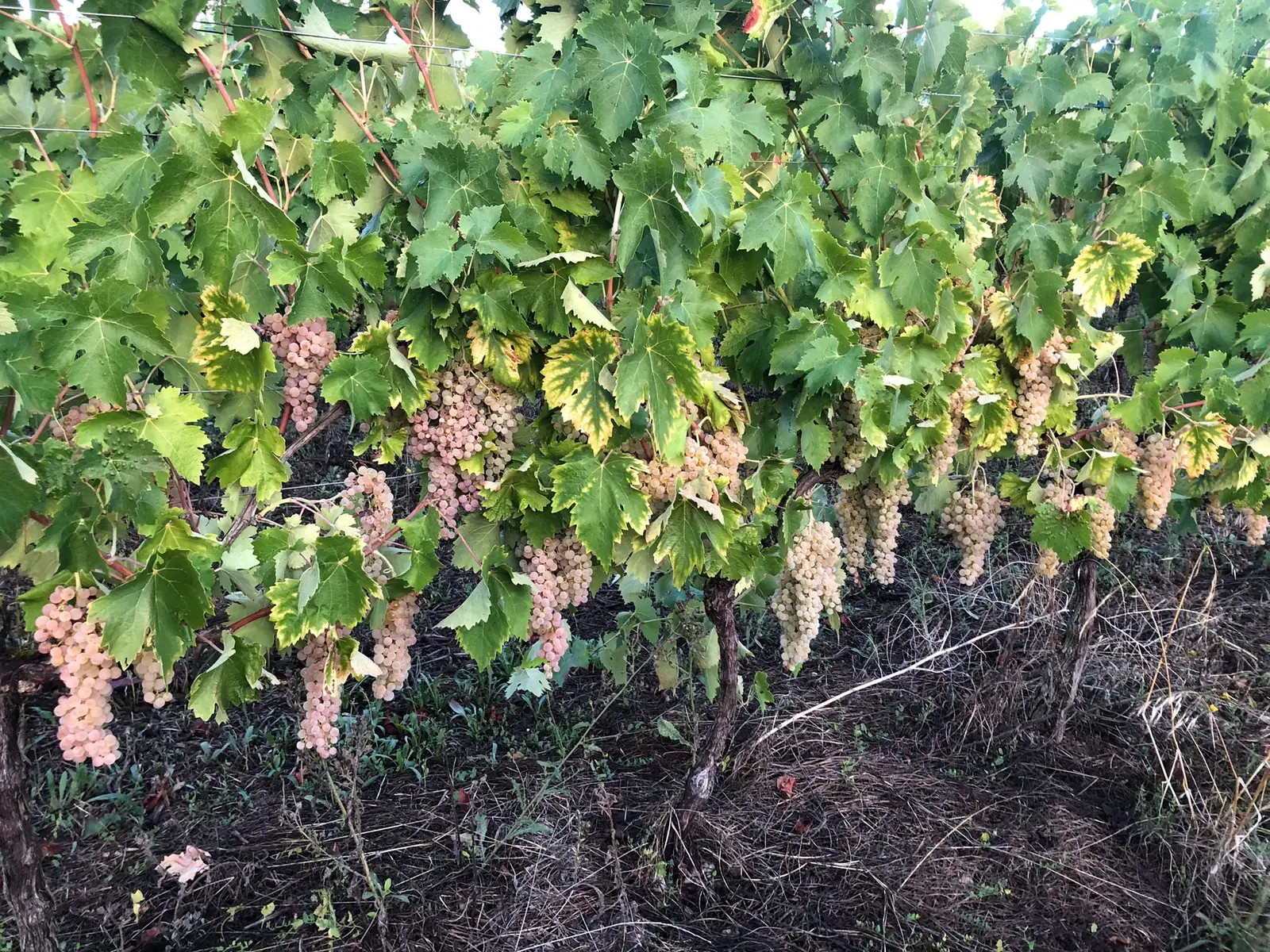
Early September at Genté. The bunches of Ugni Blanc have taken on a pinkish hue, the sample bags are piling up in the bucket and the laboratory is in full swing: we have just carried out our final ripeness check ahead of the 2026 harvest. It is this test that determines the harvest date, plot by plot. For our earliest-ripening grape varieties, the answer is clear: the harvest is imminent.
The key point
- We harvest when the balance between sugars and acidity is at its optimum, not on a pre-determined date. Regular checks, from veraison to harvest, tell us when this point has been reached.
- Each test measures total acidity, pH, potential alcohol content by volume and assimilable nitrogen, using a representative sample from each plot.
- Despite the drought that severely affected the region in 2026, our musts show adequate levels of assimilable nitrogen: enough to ensure complete spontaneous fermentation without the need for any additions.
- The pinkish colour of the Ugni Blanc berries is not a fault: it is a grape variety that regains its natural, original colours when we stop ‘desaisonising’ it with synthetic molecules.
Why monitor ripeness rather than just looking at the calendar
A grape does not ripen in just one dimension. Whilst sugars accumulate in the berry, acidity decreases, the skin softens, the aromas change and the seeds turn brown. These trends do not coincide at the same time from one year to the next, nor from one plot to another. Harvesting ‘as usual’ is tantamount to taking a gamble. We prefer to measure.
For a Grande Champagne estate, the challenge is unique. Wine intended for distillation must remain low in alcohol and distinctly acidic: it is this natural acidity that protects it during the weeks between fermentation and distillation, as the ‘Cognac’ appellation prohibits the use of sulphites in these wines. The same principle applies to our sparkling grape juices HoméoJuices: fruit harvested at the right stage of ripeness produces a lively juice, without the need for any adjustment.
If harvested too early, the grapes are green, lacking in aroma and low in sugar. If harvested too late, the acidity drops, the potential alcohol content rises and the yeasts run out of food. Between the two, there is a window of just a few days. Our job over the summer is to find it.
In the vineyard: taking a sample that tells the truth
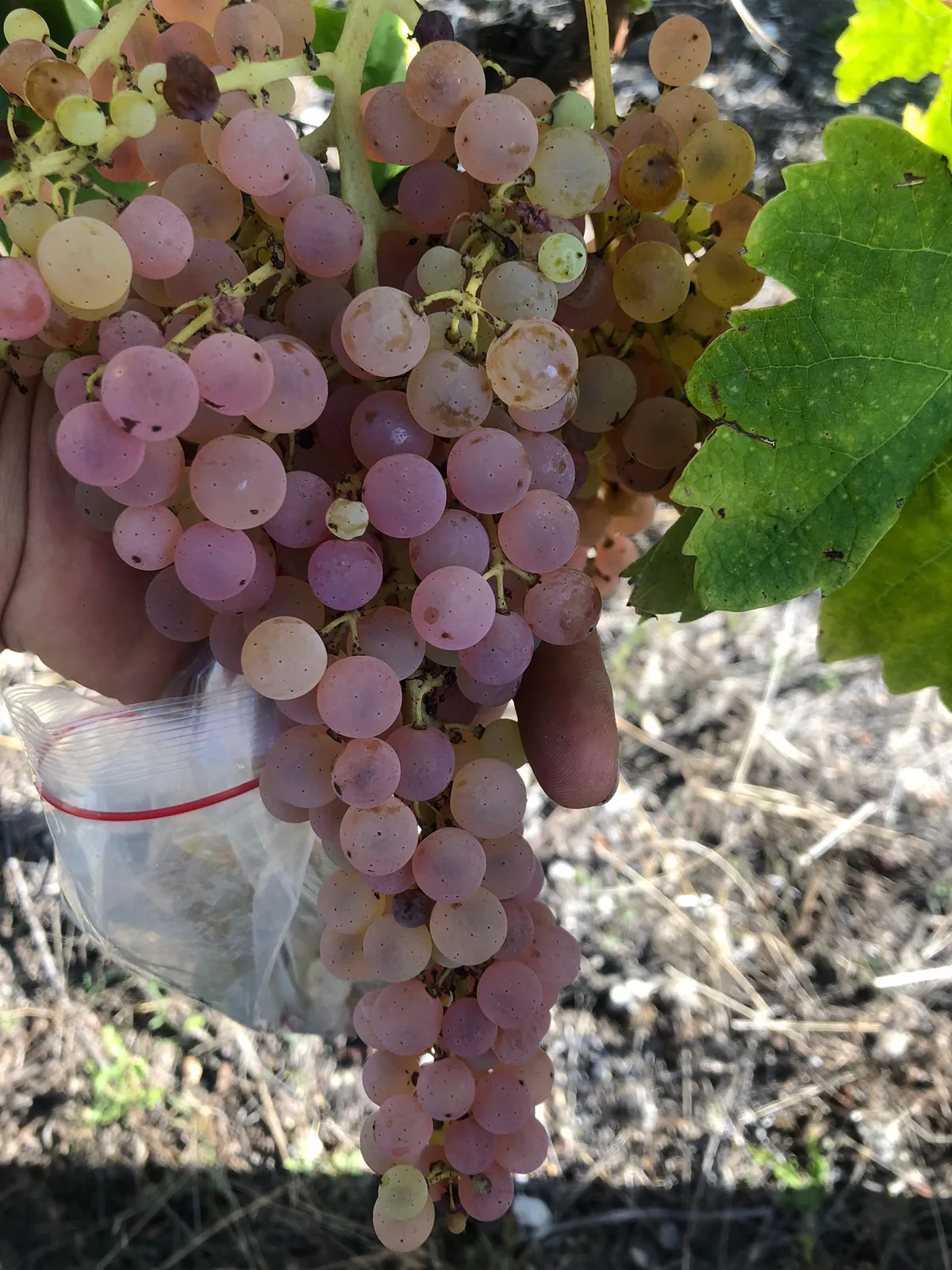
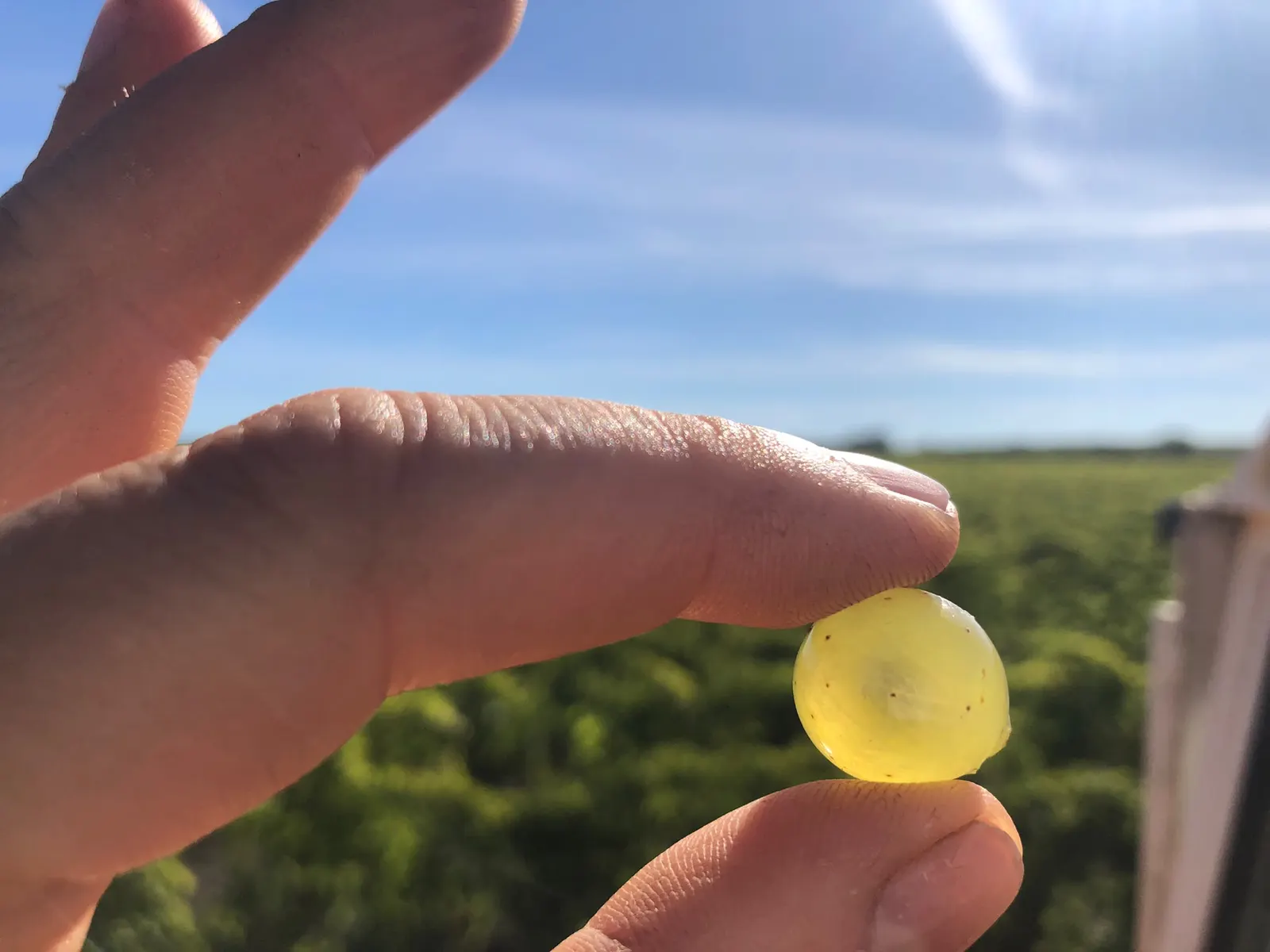
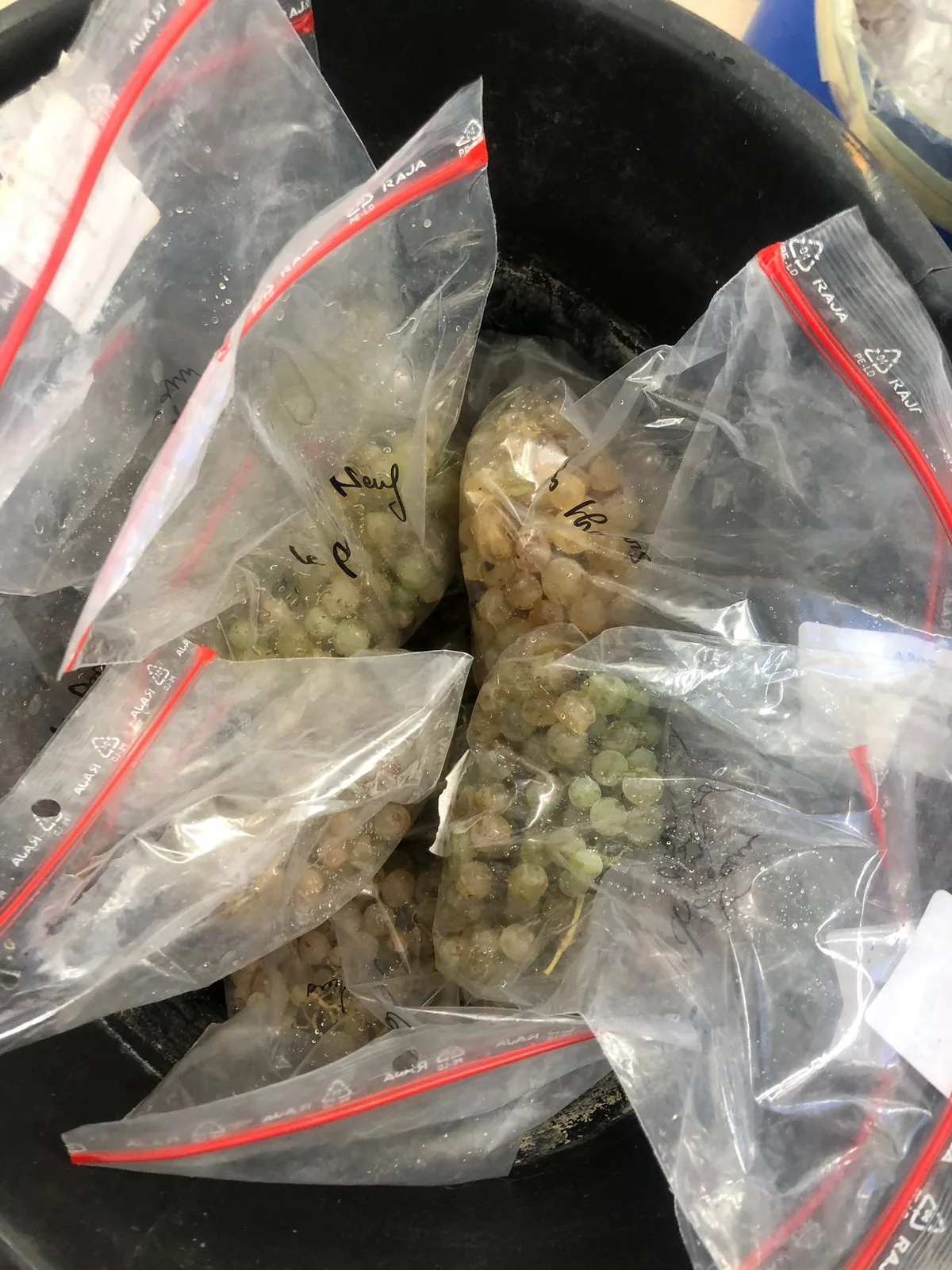
It all begins in the vineyard, and everything can go wrong right from this stage. A bunch picked on the sunny side, at the top of the vine, will always be riper than the average for the plot. We therefore take individual berries, not whole bunches, and systematically vary our selection: both sides of the row, the top and bottom of the bunch, the shaded interior and the exposed exterior, vigorous vines and tired ones. Around two hundred berries per plot, without looking at which ones.
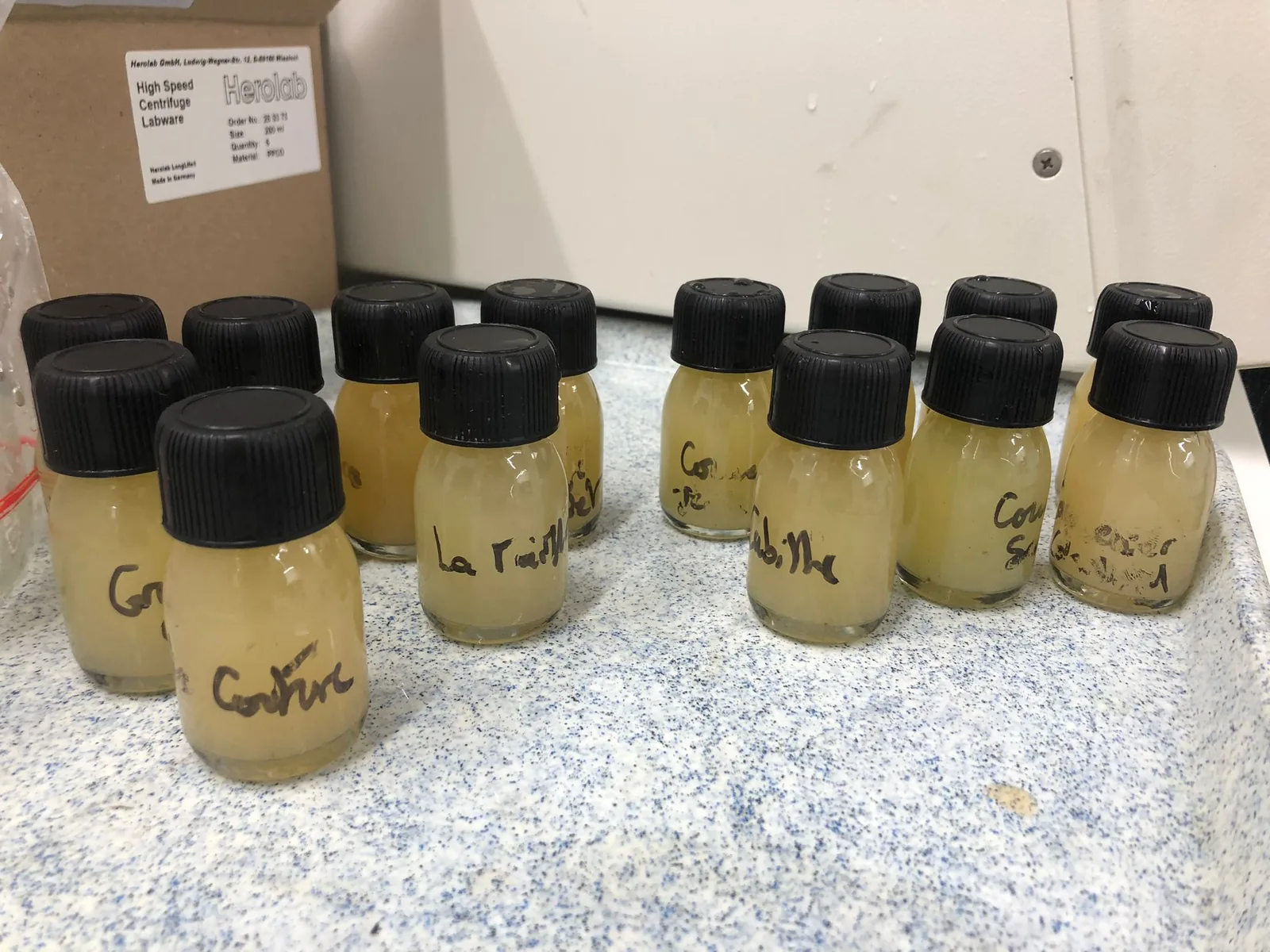
Each bag is labelled with the name of its plot. This detail matters: our plots in Genté don’t all react in the same way. In the same week, one might be ready whilst another might still need another eight days. This monitoring allows us to harvest them separately, each at its own time, rather than all at once.
In the laboratory: what we measure, and why
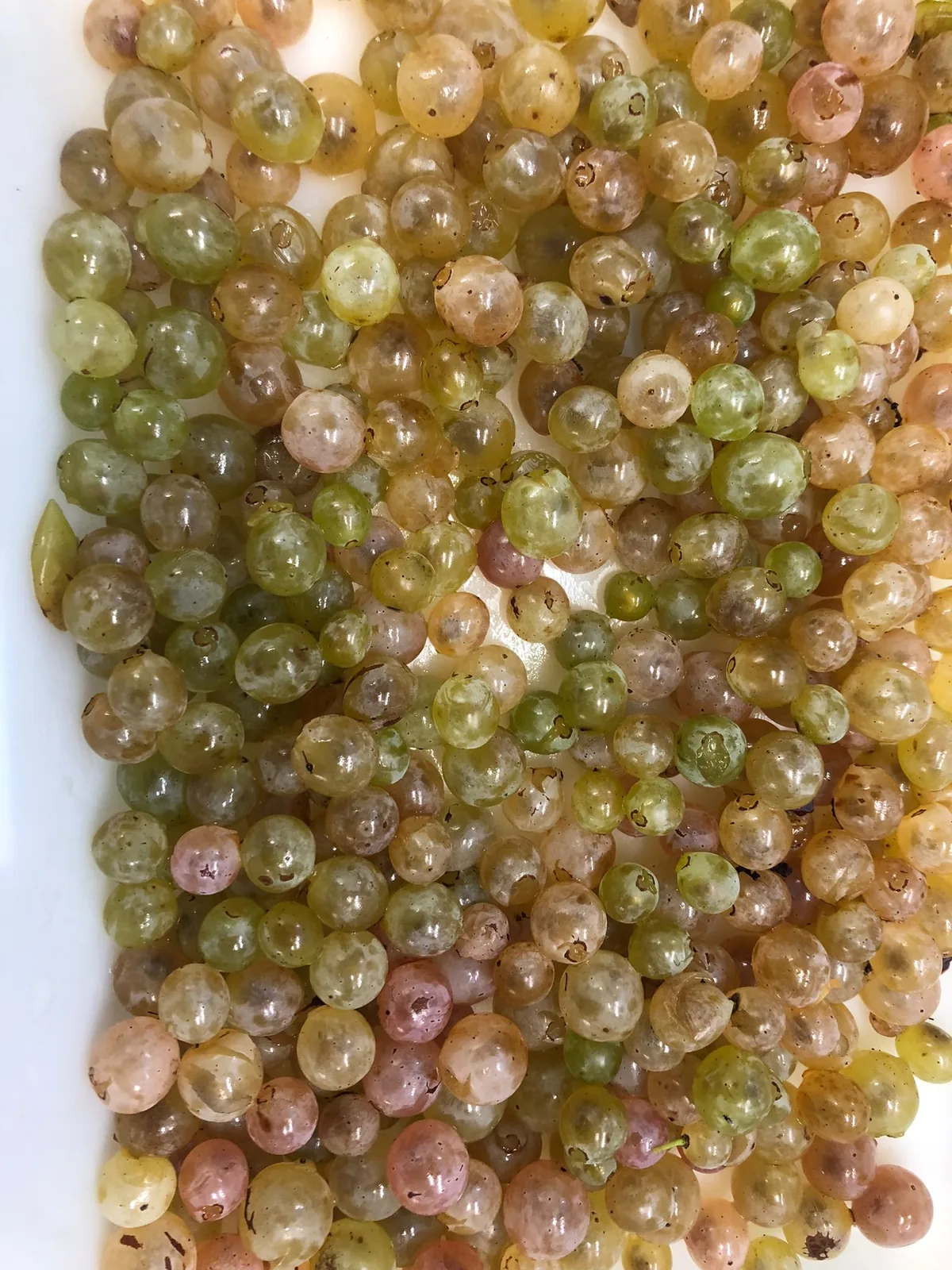
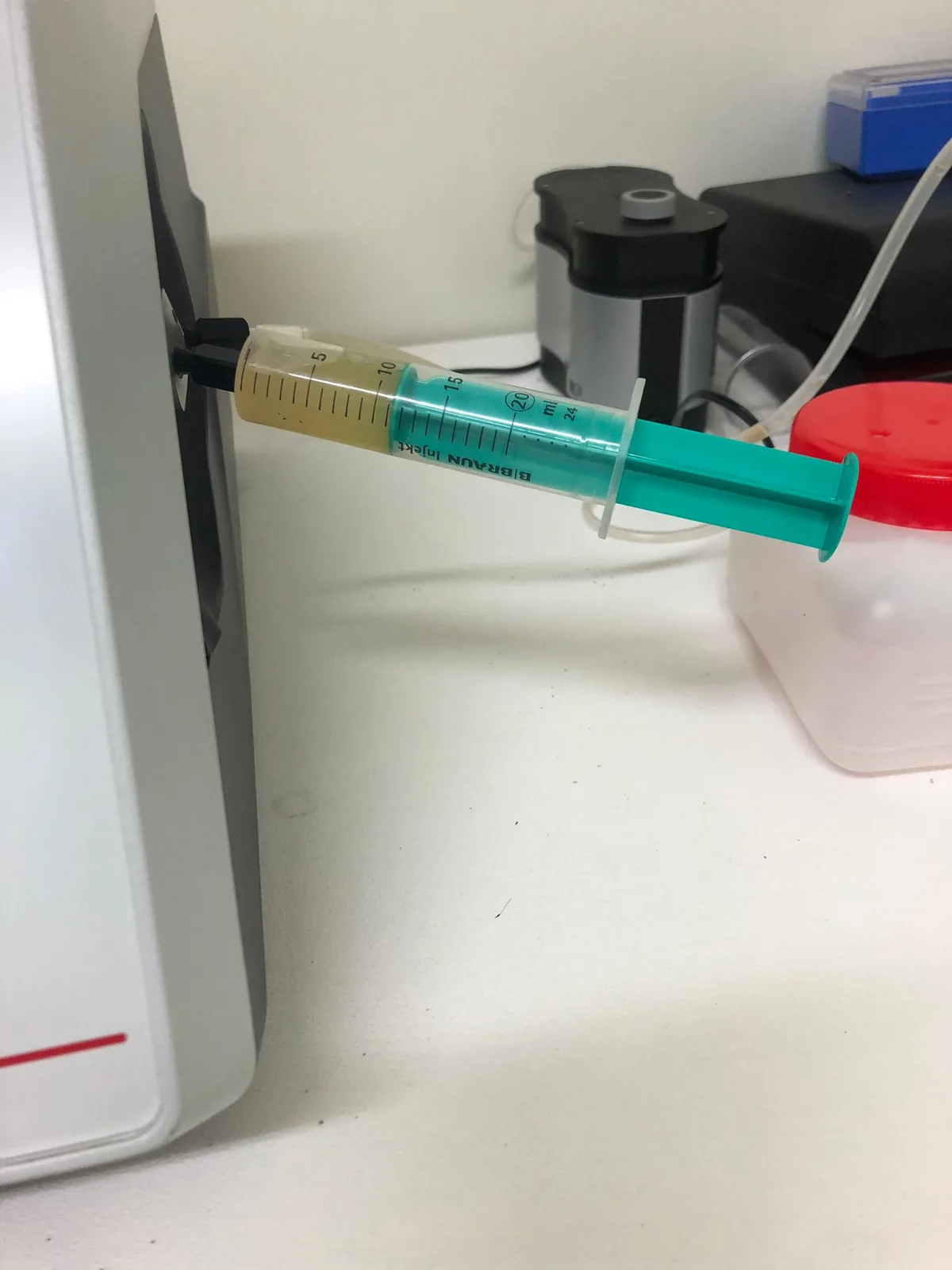
Back at the winery, the grapes are destemmed, weighed, then crushed to extract the must. Centrifugation clarifies the juice, and each bottle is sent to the analyser. There are four figures we’re primarily interested in.
Potential alcohol content by volume
Potential alcohol by volume (ABV) expresses the sugar content of the must in terms of the alcohol content that would result from complete fermentation: approximately 16.8 g of sugar per litre for 1% vol. This is the first indicator of ripeness, but not the most important one for us. In Cognac, we do not seek out the sweetest grapes: a distillation wine of around 9 to 10 per cent by volume remains the benchmark, and too high a degree comes at the expense of finesse in the still.
Total acidity
Expressed in grams per litre, this measures the total acidity of the must, primarily tartaric and malic acids. It decreases throughout the ripening process, as the malic acid is ‘breathed out’ by the berries under the influence of heat. This is the variable we monitor most closely: it is what protects the wine without the need for sulphur, and it is what gives the HoméoJuices their freshness.
pH
pH does not mean the same thing as total acidity: it measures the strength of this acidity, not its quantity. A low pH, around 3.0 to 3.2, indicates a stable environment that is not conducive to unwanted bacteria. A pH that rises rapidly towards the end of ripening is a sign that you need to act quickly, even if the sugar levels still seem modest.
Available nitrogen
This is the parameter that is discussed the least, yet it is the one that determines what happens next. Available nitrogen – in the form of ammonium and free amino acids – is the yeast’s food source. A must lacking in this ferments slowly, sometimes stops before completion, and produces unpleasant sulphur compounds. In a conventional winery, this is corrected using ammonium salts or commercial nutrients. We add nothing: our fermentations are spontaneous, driven by the yeasts present on the grape skins. The only leeway we have, therefore, is the grape itself.
In addition to these four measurements, we record the weight of two hundred grapes, which tracks changes in fruit size, and, where relevant, the malic acid to tartaric acid ratio. We note everything, test after test. It is the trends that tell the story, rather than the figures on any one day.
The 2026 drought: stable levels of available nitrogen
The summer of 2026 was a tough one for the region. The drought had a significant impact on the Charente vineyards, and one of the first effects of dry soil is a drop in assimilable nitrogen in the musts: the vines, under water stress, supply fewer nutrients to their berries. Many wineries are expecting difficult fermentations this year.
Our analyses tell a different story. Despite the drought, our musts show satisfactory levels of assimilable nitrogen, and we are delighted. We do not claim to explain everything. But since we began treating the vines with holohomeopathy – using minute doses and no synthetic chemicals – we have observed that the vines cope better with climatic fluctuations: fewer growth stoppages, foliage that holds up well, and this year, grapes that have continued to nourish themselves. We document these observations season after season, as part of an estate conceived as a whole, where the living soil does much of the work.
Why our Ugni Blanc berries are pink
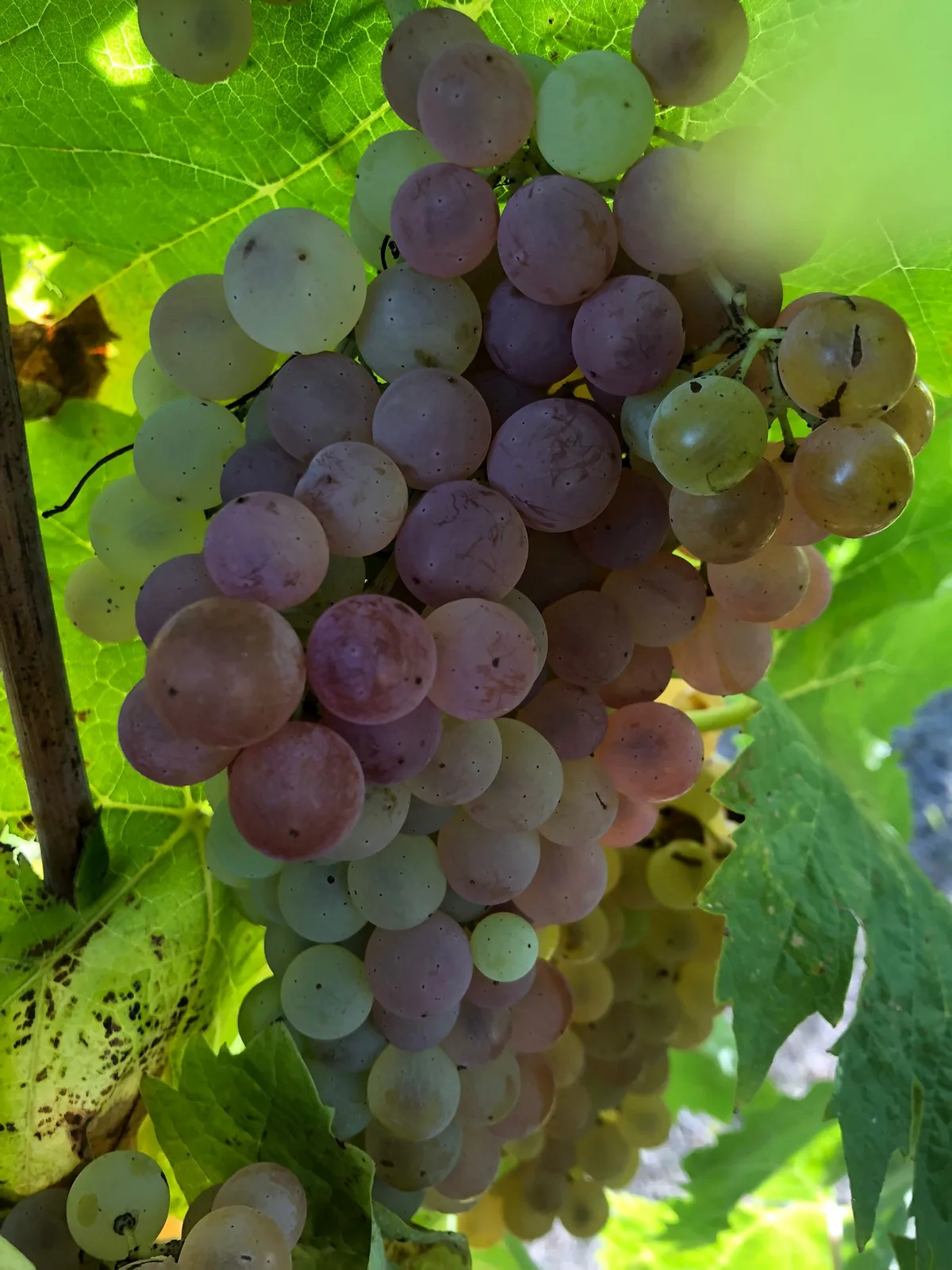
Visitors notice it straight away: our Ugni Blanc bunches are not yellow-green; they turn pink. This is neither a different grape variety nor a disease. It is Ugni Blanc as it naturally is when left undisturbed.
A grape variety grown with repeated applications of synthetic chemicals undergoes a cycle that is no longer quite its own: the plant is ‘desynchronised’, spurred on or held back by substances that do not originate from it. When these treatments cease, the vine regains its own production rhythm, and with it its original natural colours. At full ripeness, on the berries exposed to the sun, Ugni Blanc takes on a pink hue. The old-timers knew this. We are rediscovering it.
For us, it is also a simple validation of our approach. Fruit that has not been subjected to aggressive treatment expresses what it is and where it comes from: the chalk of Genté, the summer it has endured, the grape variety it is. What we seek in the glass begins with this colour on the vine.
And now: the harvest
For our earliest-ripening plots, the growth curves have crossed. The sugar levels are there, the acidity is still crisp, and the nitrogen levels are good: we’ll be harvesting in the very next few days. The Ugni Blanc, a late-ripening variety, will follow, plot by plot, at the pace dictated by our next checks.
Part of this harvest will become wine, then brandy, in our Charente still this winter. Another part will become HoméoJuices, our sparkling grape juice, where the balance of sugar and acidity measured today can be enjoyed straight away. In both cases, the same rule applies: nothing added, nothing adjusted. That is why checking ripeness is not a mere formality for us. It is the only adjustment we allow ourselves, and it is done before the harvest, not after.
→ Come and see the grape harvest and the laboratory by appointment
To understand how we care for the vines throughout the year, read our article on plant homeopathy, and for the previous instalment of this journal, summer at Genté: flowering and fruit set. Flavie and Virgile welcome you to the estate, and the HoméoJuices are available in the shop.
 Flavie & Virgile · Domaine de Genté