Charente distillation explained: copper stills, double heating and the ‘part du temps’
From wine to ‘brouillis’, from ‘brouillis’ to the heart of the still: the Charente distillation process explained from the cellar, step by step. Why copper? Why two distillations? And why taking time is not just a tradition but a necessity.
Night has fallen over Genté. The still is breathing, the copper is warm, and the scent of mulled wine fills the cellar. In front of the still, we keep watch. By the end of this, you’ll know exactly what happens between the wine and the brandy — and why the slow process isn’t just folklore.
The essentials
- Charente-style distillation relies on a double heating process in a copper still: the mixture is distilled twice.
- First run: the wine becomes ‘brouillis’, at around 28–32% ABV.
- Main distillation: the heads, heart and tails are separated — this is when the cut is made.
- Only the ‘heart’, at around 68–72% vol, is transferred to casks to mature.
- The copper is not merely decorative: it purifies the eau-de-vie.
- Everything must be completed by 31 March, in accordance with the Cognac AOC regulations.
It all begins with the distillation wine
Before the still, there is the wine. A wine that nobody would drink as it is. Tart, light, barely 9% ABV. That is precisely what is needed.
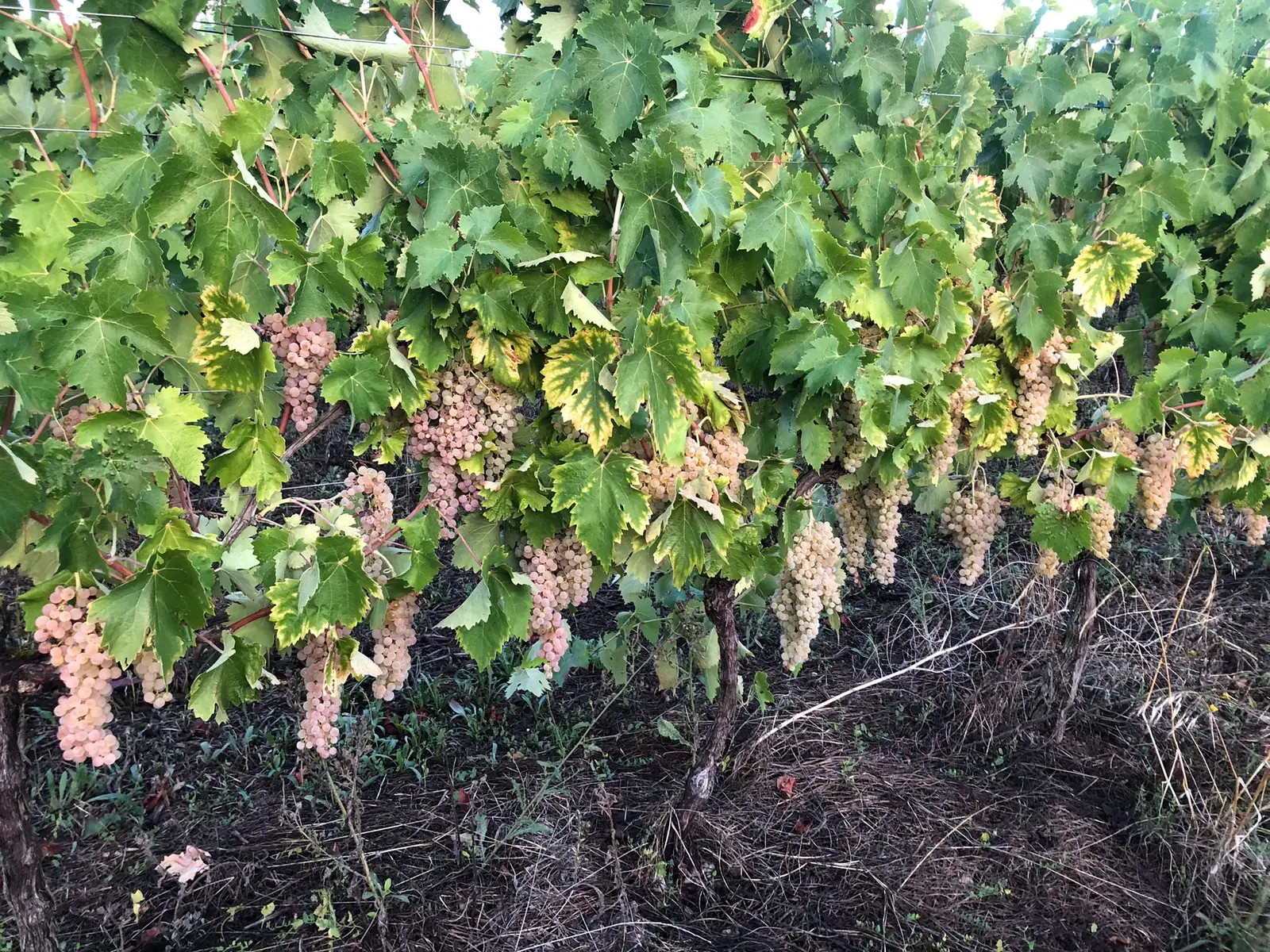
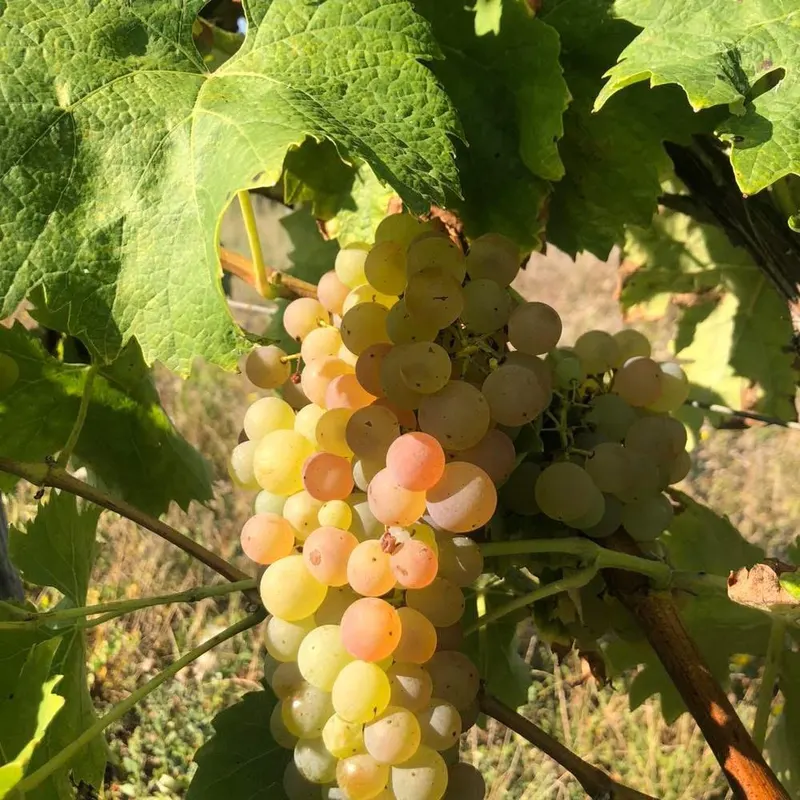
Here, Ugni Blanc dominates, as it does almost everywhere in Charente, sometimes complemented by Folle Blanche or Colombard. These grape varieties ripen late and retain a distinct acidity. This acidity protects the wine and shapes the finesse of the brandy to come.
One rule above all: no added sulphur. A wine intended for distillation remains unsulphited. Sulphur stifles the aromas and wears down the copper. We want the opposite: a wine that is unadorned, true to the grape, and which tells the truth of the vintage.
For distillation creates nothing. It reveals. Everything that the still will concentrate is already there, in the glass of cloudy wine. That is why we are committed to winemaking that preserves the truth of the grape, the foundation of distillation. A true wine produces a true brandy. The still does not correct the raw material: it amplifies it, flaws and all.
First heating: the birth of the ‘brouillis’
The still is filled with wine. An open fire is lit beneath it. The principle is almost childishly simple: alcohol evaporates before water. It is heated gently, and the first vapours rise.
They rise towards the dome, gliding down the swan’s neck, that long, curved copper tube. Then they plunge into the coil, submerged in cold water. There, they condense. Drop by drop, a cloudy liquid flows down the spirit trap.
This liquid is the ‘brouillis’. A first, still coarse distillate, at around 28 to 32% vol. We have simply concentrated the alcohol for the first time. Nothing noble yet: the ‘brouillis’ is not an end in itself, it is a stage in the process.
This first distillation takes several hours. It must not be rushed. A flame that is too fierce drives the vapours too quickly, upsets the balance and roughs up the material. A slow flame, on the other hand, allows time for the components to separate properly. Patience begins right from that very first evening.
When the still has run out of alcohol, the ‘brouillis’ is ready. It is set aside. Then the process is repeated, until enough has been gathered for the second distillation. The real step, the one that matters, has not yet taken place.
The right heat: the art of cutting
The stillings are poured into the cleaned still. The fire is relit. This is the main distillation, also known as the ‘repass’ – the second distillation. This is where everything is decided.
This time, not everything is collected in the same way. As the hours pass, the nature of the liquid flowing out changes. It must be sorted as it flows, by sight, by smell and by alcohol content. This is the ‘coupe’: the moment when human judgement takes over from the machine.
The brandy is produced in three successive fractions.
| Fraction | Approximate alcohol content | Use |
|---|---|---|
| Heads | over 72% vol | Discarded: too volatile, too pronounced. Set aside or reused. |
| Heart | approx. 68–72% vol | Retained: this is the brandy that will be put into casks. |
| Tails (flegmes) | at the bottom, with a declining alcohol content | Weak and heavy: recycled into the next batch. |
It all comes down to the balance. When exactly should one stop taking the heads? When should one move on from the heart to the tails? No clock can tell. The alcohol content provides a guide, but the nose is the deciding factor. Cut too early, and you lose the finest elements; too late, and you taint the heart. Our precise blending remains a house speciality — shaped by the terroir, the vintage, and the craftsman’s touch.
It is here, before the alcohol meter, that the character of the future Cognac is decided. Not by a formula. But by a judgement, repeated night after night. This is what we call an ‘Author’s Cognac’: an eau-de-vie born of a human decision, not of automatism.
Why copper, and not something else?
We could distil in steel. We don’t. The Charente still is made of hammered copper, and this is not merely a matter of decorative tradition.
Copper is at work during the heating process. On contact with the vapours, it acts as a subtle catalyst: it traps and neutralises the sulphur compounds – those heavy molecules with a smell of cabbage or eggs that would spoil the eau-de-vie. Without copper, these flaws would end up straight in the glass.
It also refines the aromas. The reactions on its surface lighten overly heavy esters, round out the body and open up the bouquet. The brandy that emerges from a copper still is cleaner, more refined, more true to itself.
Copper develops a patina, year after year. Its interior becomes coated with a thin green layer, a testament to the work carried out. This living metal takes on the rhythm of the cellar. It ages with us. In its own way, it forms part of the Campanian chalk and embodies the signature of the terroir that the still captures.
Choosing copper, therefore, means choosing purity. A metal that sacrifices a little with every distillation to ensure the eau-de-vie is pure. Nothing else does this job quite as well.
Slowness: a necessity, not a choice
We sometimes hear that slow distillation is merely a craftsman’s whim. The opposite is true. Slowness is a necessity.
A rushed distillation extracts everything in one go. The fractions mix together, the cut becomes blurred, and the delicate aromas are destroyed. A slow distillation, on the other hand, allows each compound to emerge in its own time. It gives the cut its precision, and the eau-de-vie its intensity.
Time, here, is a tool as real as fire. Distilling a batch takes many long hours. One hardly sleeps on such nights. One watches over the flame, the trickle of liquid, the temperature as it fluctuates. The time involved is this patient vigil, for which there is no substitute.
The Cognac AOC, moreover, sets the framework for this season. Distillation must be completed by 31 March at the latest following the grape harvest. After that date, not a single drop. This framework compels us to be precise: every winter night counts, and one can only distil well what one takes the time to distil.
Slowness is not laziness. It is attention made visible. The complete cycle of life, from vine to bottle, passes through the still at its own pace. To rush it would be to lose what we are seeking.
From the still to the cellar: what next?
The cut has been made. The heart, at around 68 to 72% ABV, awaits, clear and fiery. Its life is only just beginning.
This clear brandy is transferred to oak casks. This marks the start of ageing, that long dialogue between the wood, the cellar air and time. The spirit mellows, the colour develops, the aromas unfold. What the still has revealed, the cask will bring to maturity.
It is from this patiently distilled heart of the distillate that our first eau-de-vie will be born. Arachnéa — unveiling imminent. To be notified when the waiting list opens, please write to us via our contact form.
FAQ — your questions about double distillation
What is double distillation in Cognac production?
It involves distilling the wine twice in succession. The first distillation transforms the wine into ‘brouillis’, at around 28–32% ABV. The second, known as the ‘good distillation’, passes this ‘brouillis’ through the still again, separating the heads, heart and tails. Only the heart becomes Cognac.
Why is the Charente still made of copper?
Because copper purifies. During distillation, it binds unwanted sulphur compounds and refines the aromas. No other metal cleans the eau-de-vie quite as effectively. It develops a patina over the years; it is a living metal that ages in step with the cellar.
How long does a Cognac distillation take?
Each distillation run takes several hours, and two successive runs are required. Above all, the entire season is strictly regulated: according to the Cognac AOC, the entire distillation process must be completed by 31 March following the grape harvest. It is a winter of waiting, not a matter of minutes.
What is meant by the ‘heart’ during distillation?
The heart is the noble fraction of a good distillation run, at around 68 to 72% vol. It flows after the heads, which are too volatile, and before the tails, which are too weak. It is the only part that is kept: the part that will go into the cask to become Cognac.
Revealing, not manufacturing
The still does not create anything. It concentrates what the vine has already produced, and entrusts it to human hands to reveal its true character. A ‘Cognac d’Auteur’ is born of this dual fidelity: to the living vine, and to the blend. To follow the estate’s first distillations and what will emerge from them, stay in touch with us. And to understand what distillation eliminates — and what it concentrates — read on here.
Flavie Aubineau, for Homéospirits.
 Flavie & Virgile · Domaine de Genté