The 2026 grape harvest: a modest yield, exceptional grapes — thanks to Mother Nature
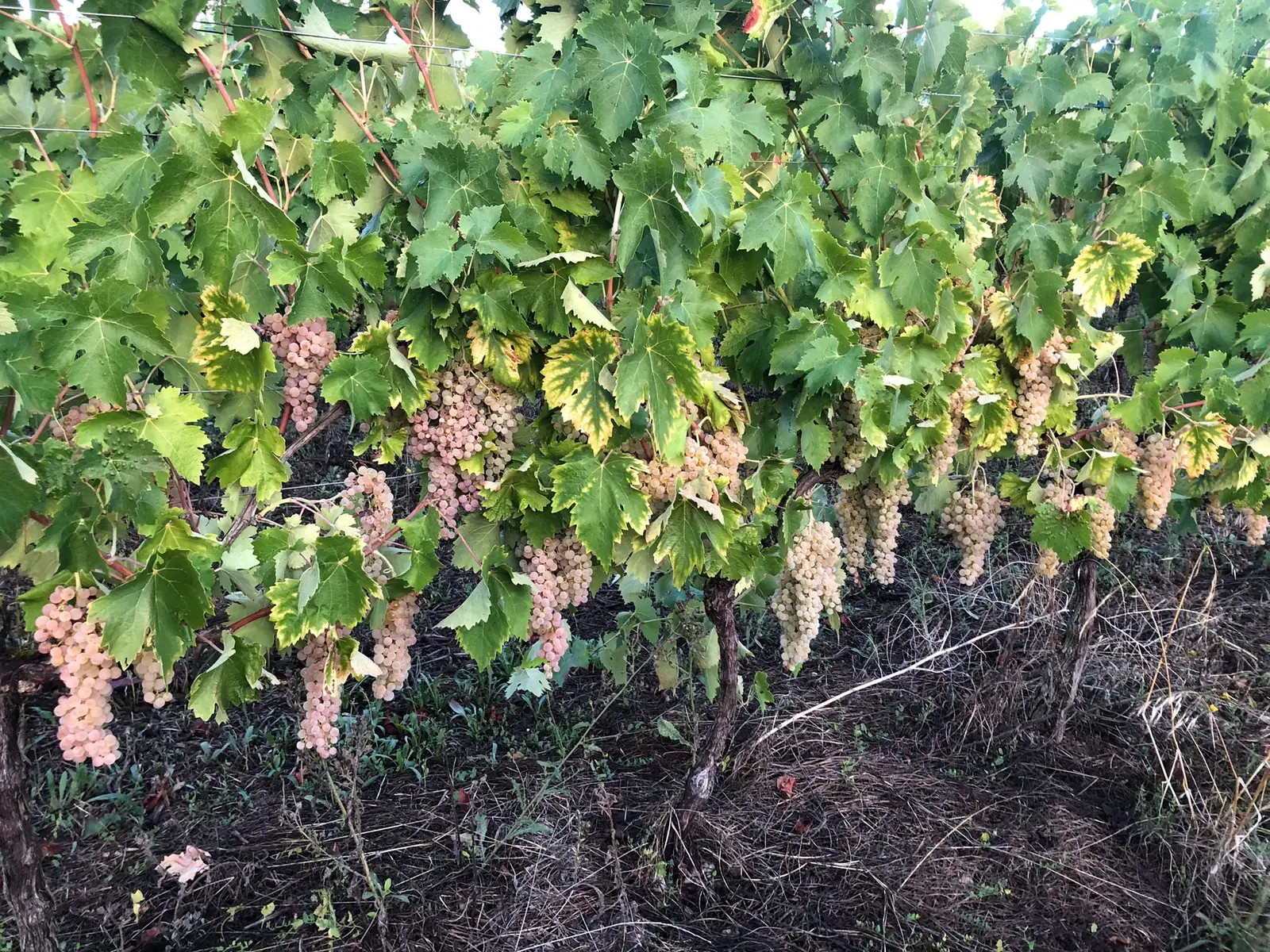
September is drawing to a close at Genté, and with it the bulk of our 2026 harvest. The outcome can be summed up in two sentences: the yield has remained modest, marked by yet another year of drought — but the grapes are succulent, and their flavour is exceptional. So we say thank you to Mother Nature, and we get back to work: helping the vines and the microorganisms in our soil to cope better with the summers to come.
September is drawing to a close at Genté, and with it the bulk of our 2026 harvest. It’s time to take stock, and it can be summed up in two sentences: the harvest was very average in terms of quantity, and yet we wouldn’t swap this vintage for any other — the grapes are succulent, the quality is there, and the flavour is exceptional. A new instalment of our Vineyard Diary, a blend of gratitude and promise.
The essentials
- The 2026 harvest is modest in volume: the drought once again took its toll on the vines, from spring right through to the harvest.
- But the quality is exceptional: golden, concentrated berries, and juice of a rare richness. When the vines bear fewer grapes, they give their all to those that remain.
- We thank Mother Nature: we work alongside her all year round, but she is the one who decides — and this year, once again, she has kept her word on what matters most.
- The next steps are already underway: redoubling our research to help the vines and soil microorganisms combat drought, protect the leaves and grapes from sunscald, and maintain living soils that retain water.
Thank you, Mother Nature
We could begin this review with figures. We prefer to start with a thank you. Because a year like 2026 — a scorching summer, scarce rainfall, soils put to the test — serves as a reminder of a simple truth that our profession must never forget: we do not produce the grapes. We prepare the vines, we observe them, we nurture them without any synthetic chemicals, but the final touch is always provided by nature.
This year, nature gave us less — and yet she gave us something better. The harvest remained very average in terms of quantity: fewer bunches, smaller berries, and juice that was slow to flow at the press. That is the price of a dry season. But what the vines carried through to the end, they nurtured carefully.
Fewer grapes, but what grapes!
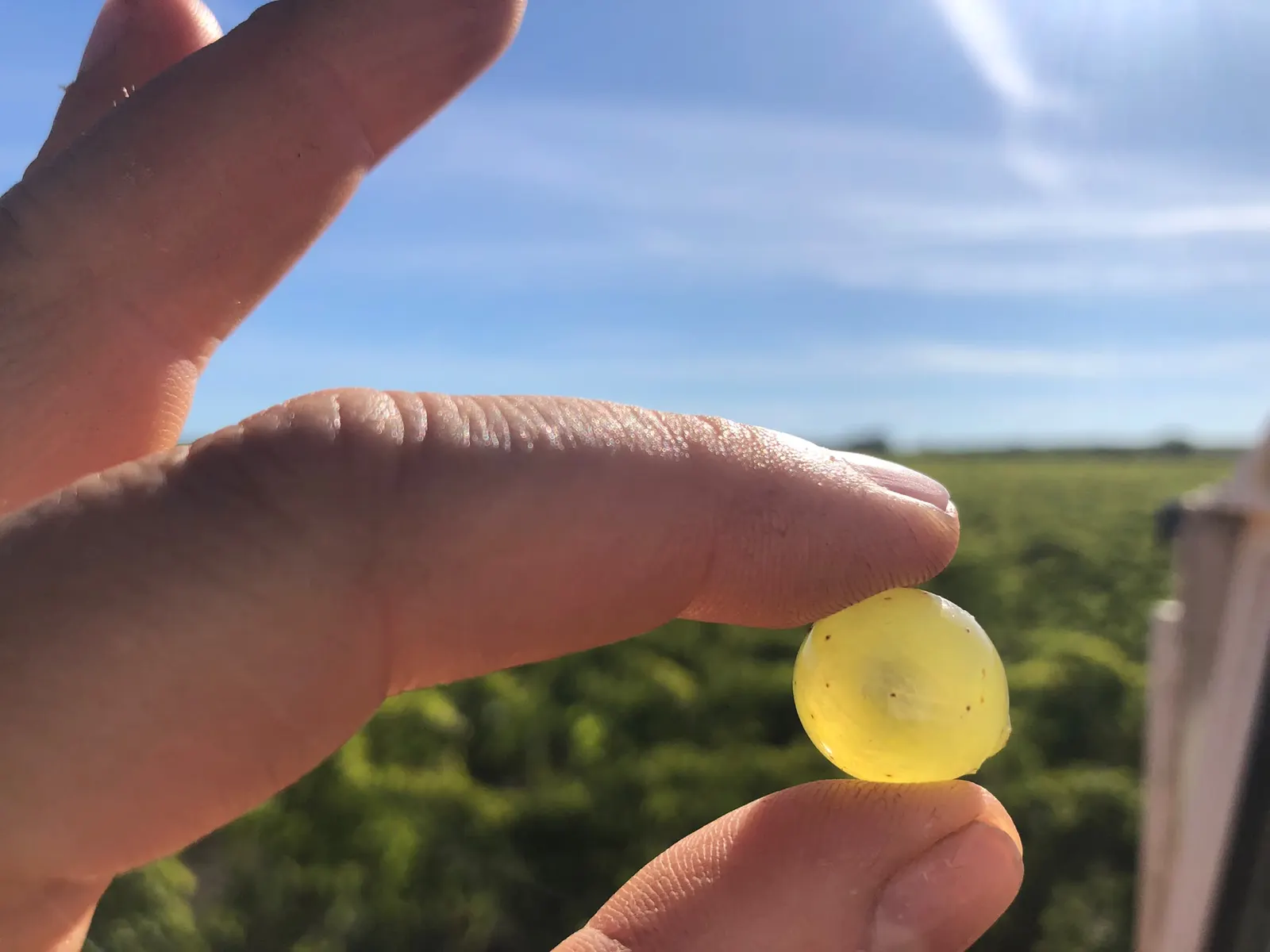
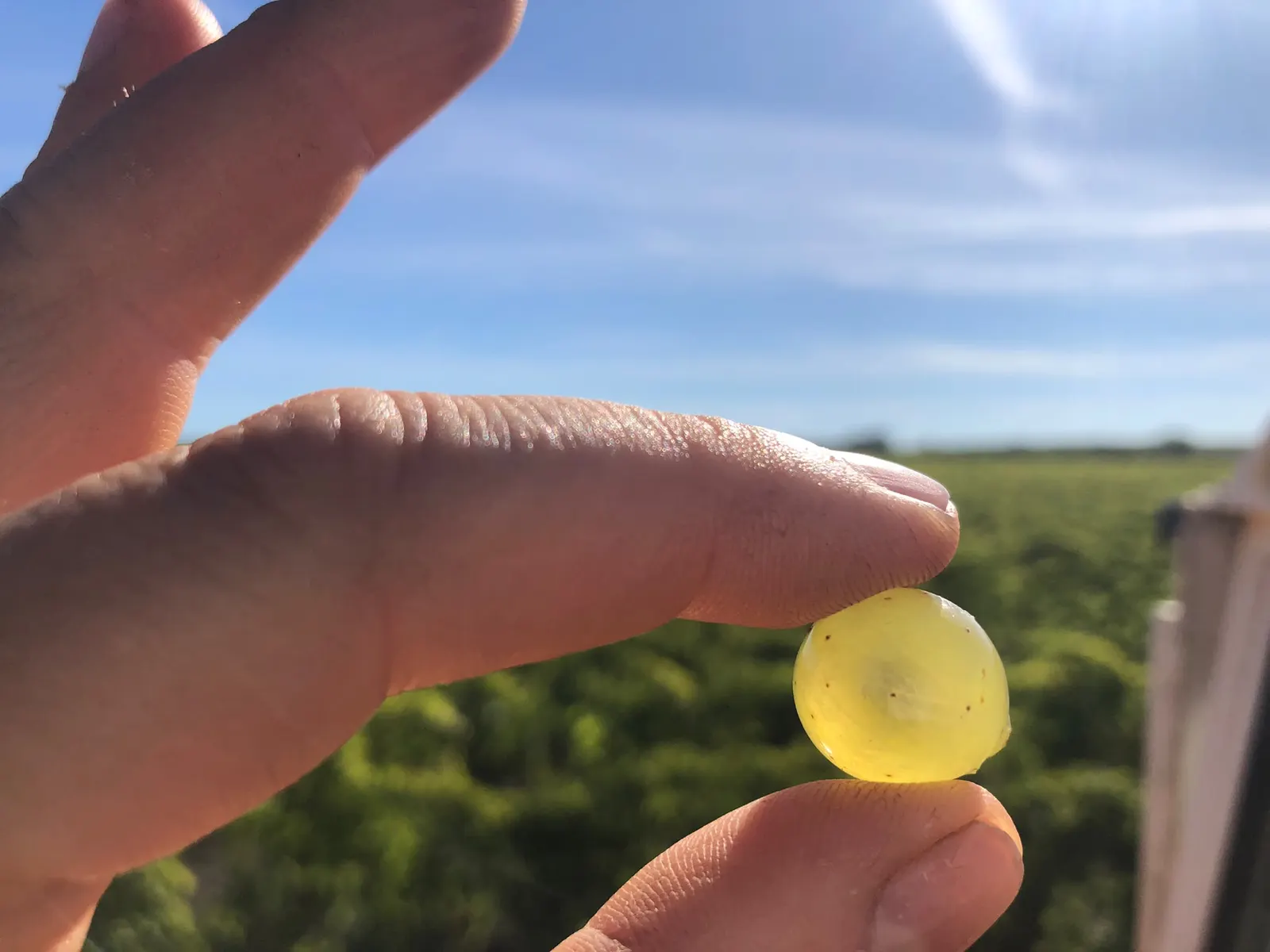
Look at this berry, picked straight from the vine in full sunlight: golden, translucent, bursting with juice. You only need to bite into it to understand the paradox of this vintage. The flesh is sweet, the acidity distinctly present — that balance we’d been watching for weeks during our final ripeness checks — and the aromas possess an intensity that bumper years sometimes dilute.
This is no coincidence; it’s a principle familiar to all winegrowers: when the vine bears fewer bunches, the grapes become more concentrated. The same sap, the same light, the same work of the roots are shared amongst fewer berries. Each one receives more. A small harvest is never good news for the vats — but it often is for the glass.
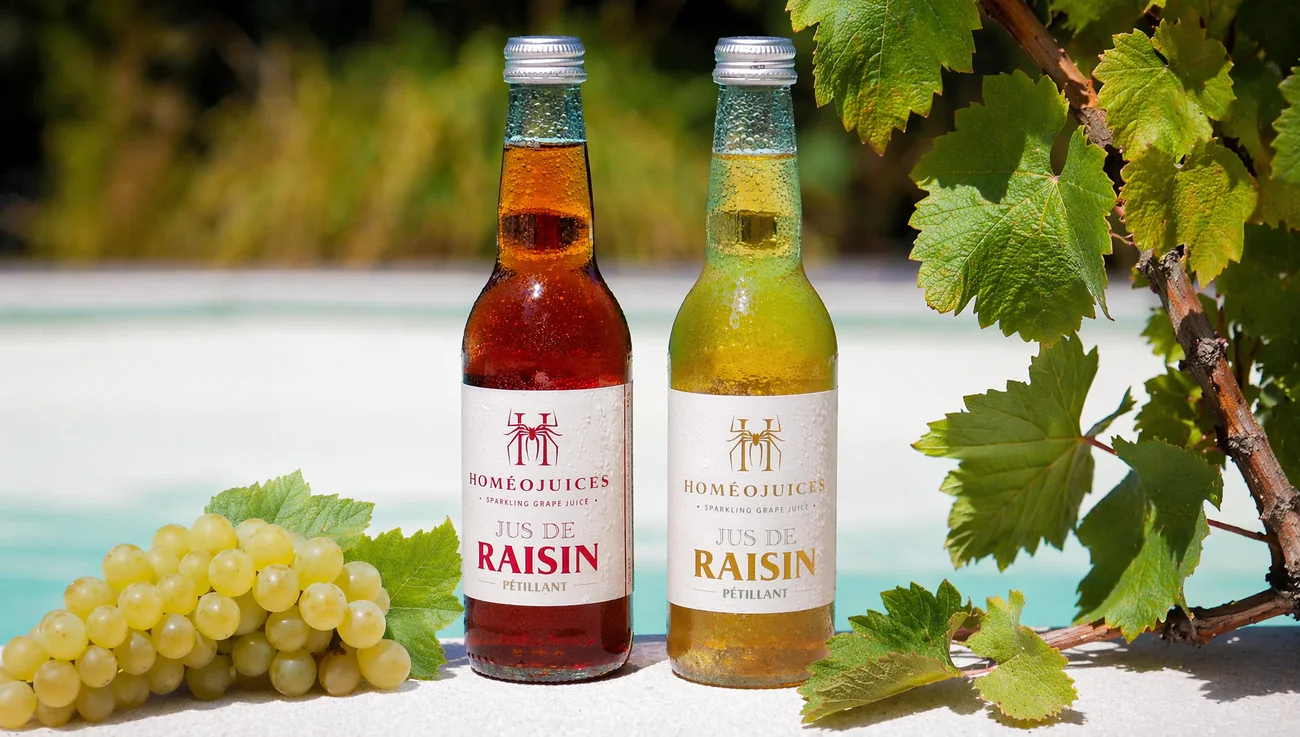
These grapes were harvested with all the care that this vintage deserved, even if it meant postponing the harvest until the cooler hours of the day to preserve their freshness right through to the winery. They will produce our distillation wines — and the sparkling HoméoJuices grape juices for the coming seasons.
What the drought teaches us
We must also face this year head-on: drought is no longer a one-off event; it is a trend. Hotter summers, scarcer rainfall, leaves and berries exposed to severe sunscald, and soils that close up when water runs out. A vine can withstand a difficult year; it is the repetition that takes its toll.
Yet the vine’s best defence is invisible to the naked eye. It plays out beneath our feet, in the living soil: mycorrhizal fungi that extend the roots and fetch water from places the plant alone could never reach; bacteria that release nutrients; and worms and insects that aerate the soil and help it absorb every drop of rain rather than letting it run off. A living soil is a sponge and a larder. A dead soil is nothing more than a surface.
This has been the guiding principle of our method from day one: never to sterilise that world with synthetic chemicals, because it is this world that will sustain the vines in dry years.
Redoubling our research
So here is our promise as the harvest draws to a close: we will redouble our research to go further. To go further in supporting the vine and its microorganisms, to help it combat drought; to protect our vines from scorching and our soils from drying out.
In practical terms, this means continuing the work we have begun with holohomeopathy — observing, testing, measuring, and starting again — seeking out what naturally strengthens the plant’s resistance to heat, and everything that keeps our soils covered, supple and teeming with life. We are not seeking to force the vines to endure scorching summers: we are seeking to give them the means to do so, with the allies they have always had.
It is a labour of patience, with no spectacular promises. But it is precisely this sort of patience that, once again this year, has given us small crates and very large grapes.
Next up: the winery
Whilst the vines begin their rest, the work shifts to a different setting: the press, fermentation, and soon the first batches of Charente-style distillation. We’ll tell you all about it here, episode by episode.
And if you’d like to taste what a Grande Champagne grape grown in this way produces, our HoméoJuices await you — the vintage in bottle, without any artificial additions.
 Flavie & Virgile · Domaine de Genté